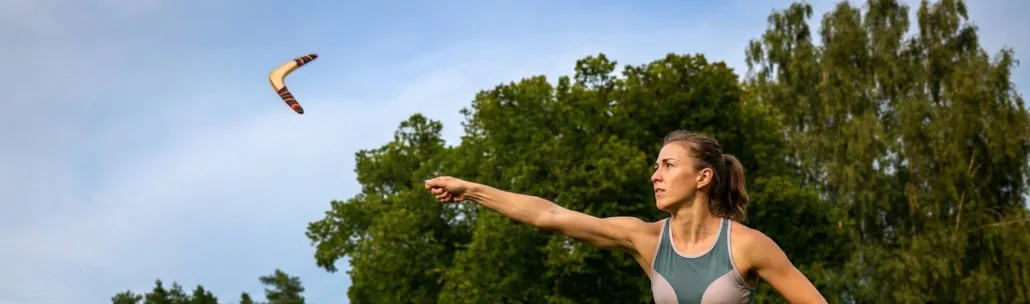
How to Throw a Boomerang So It Comes Back (Beginner Guide)

Want to learn how to throw a boomerang so it actually comes back? The secret isn’t throwing it hard—it’s all about the spin and the angle. To throw a returning boomerang correctly, use a “pinch” grip, face the wind and turn 45 degrees to the right, hold the boomerang almost vertically (at a 1:00 o’clock angle), and snap your wrist upon release to create maximum spin. Never throw it flat like a frisbee!

Need an easy-to-throw model? Check out our Top Boomerangs for Beginners.

🪃

Practice in the Free 3D Boomerang Game

Learn the grip, the wind angle, the 1:00 tilt, the spin and the sandwich catch in six short lessons — right here in your browser, before your first real throw.

▶  PLAY THE GAME

Open the game in a new tab ↗

LEFT-HANDED OR RIGHT-HANDED ?

All our boomerangs will work, regardless of which is your dominant hand. Only the throwing technique is different based on which hand you use.

SELECT YOUR DOMINANT HAND:

Safety First

Before you begin, ensure you have a safe environment.

  • Find a proper area

    Only throw over grass or sand. Do not throw over concrete, asphalt, or near trees, as hard impacts can damage your boomerang.

  • Check the Wind

    The best conditions are a light breeze (1–3 m/s). Do not throw in winds exceeding 5 m/s, or the boomerang may balloon and drift dangerously.

  • Spatial Requirements

    Ensure you have a radius of at least 50 to 100 meters (approx. 100 yards) of open space.

  • Spectator Safety

    Bystanders must stand behind you and slightly to the left. Never allow anyone inside the throwing circle.

INSTRUCTIONS FOR RIGHT-HANDED THROWERS

Mastering the return takes patience and technique. Follow these fundamental steps to achieve the perfect flight of your boomerang.

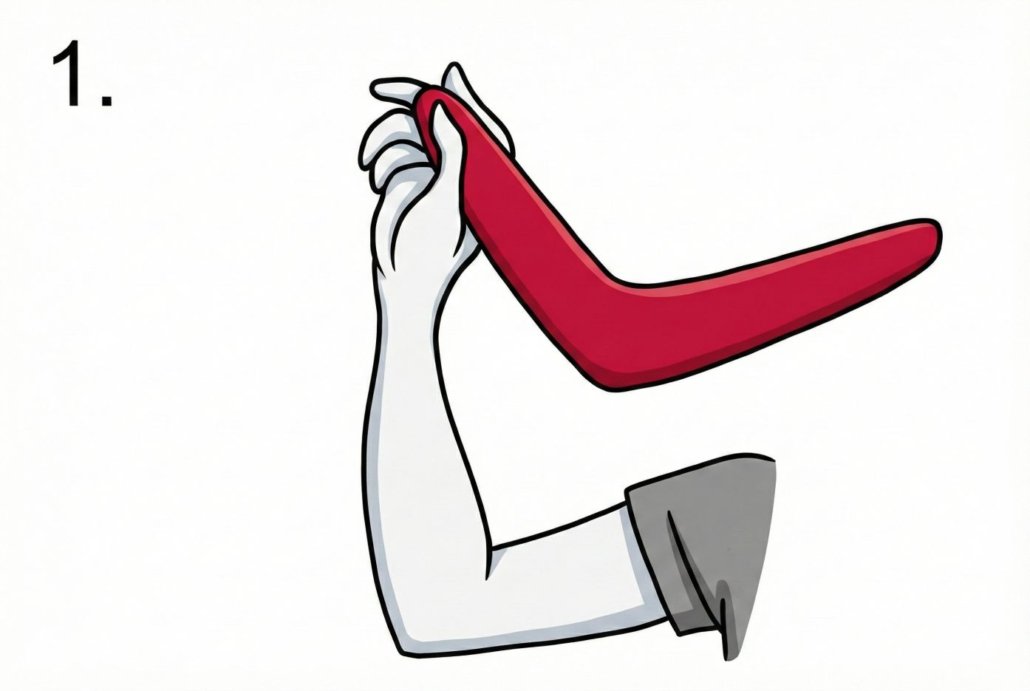
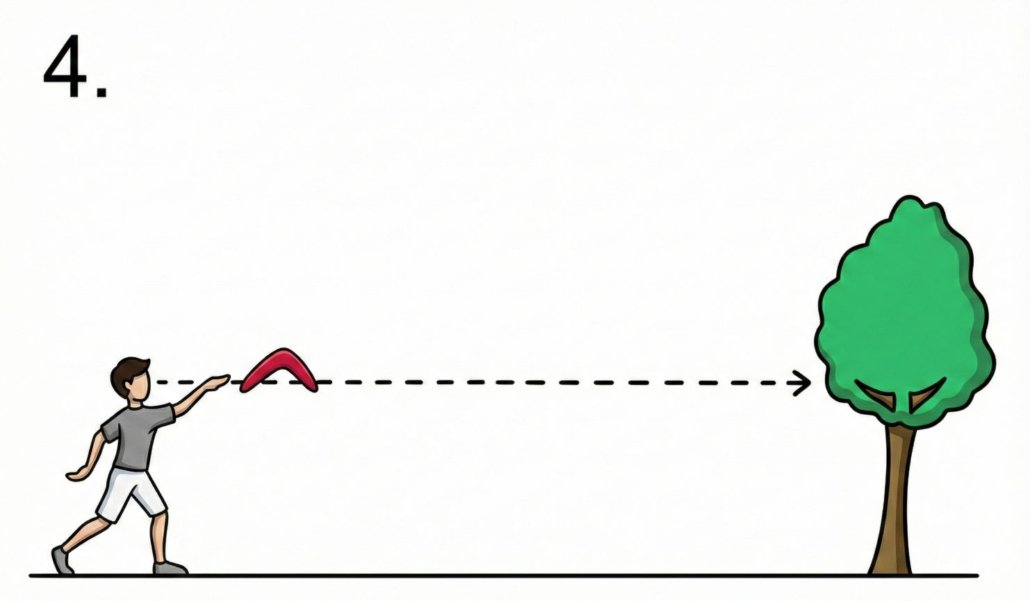
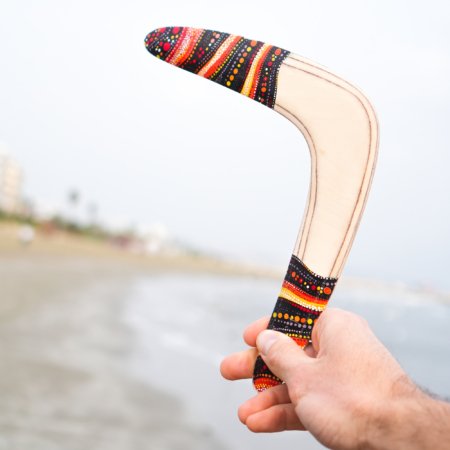
A hand demonstrating the proper grip for how to throw a boomerang, pinching the wingtip firmly between the thumb and index finger.

1. The Grip (The Pinch)

Hold the boomerang vertically. The decorated/rounded side must face YOU (towards your face), and the flat side must face AWAY from you.

  • Pinch the wingtip firmly between your thumb and index finger, as if you are holding a key or a pen.
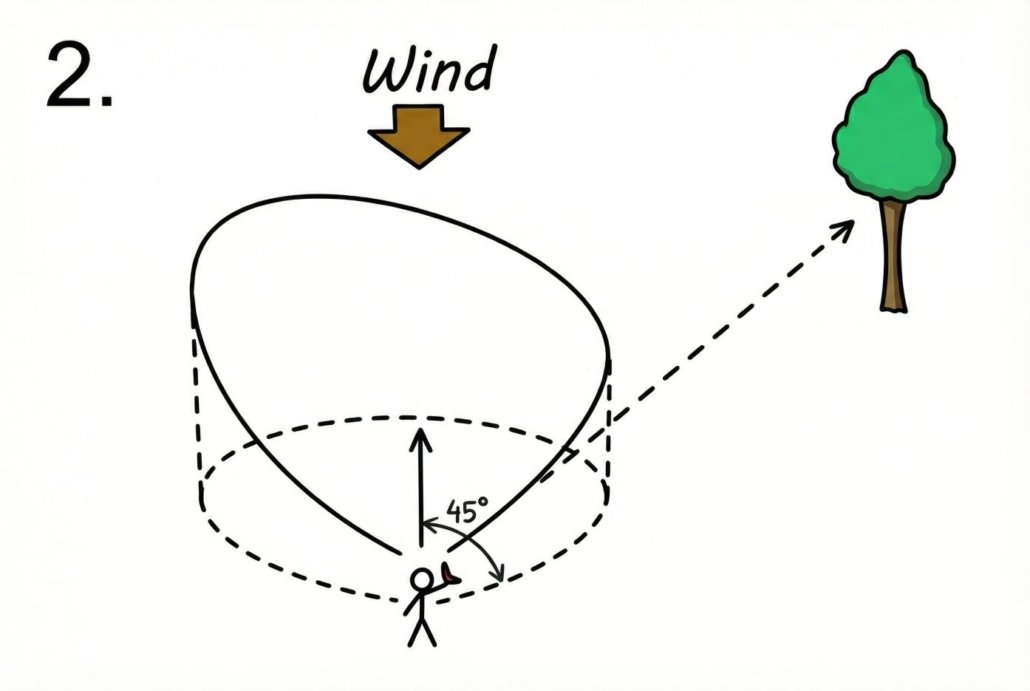
Diagram illustrating proper boomerang throwing wind direction, showing a right-handed thrower turning their body 45 degrees to the right of the oncoming wind.

2. The Wind Direction

Face the wind directly. Now, turn your body 45° to the right. You are not throwing into the wind, but 45° to the right of the wind.

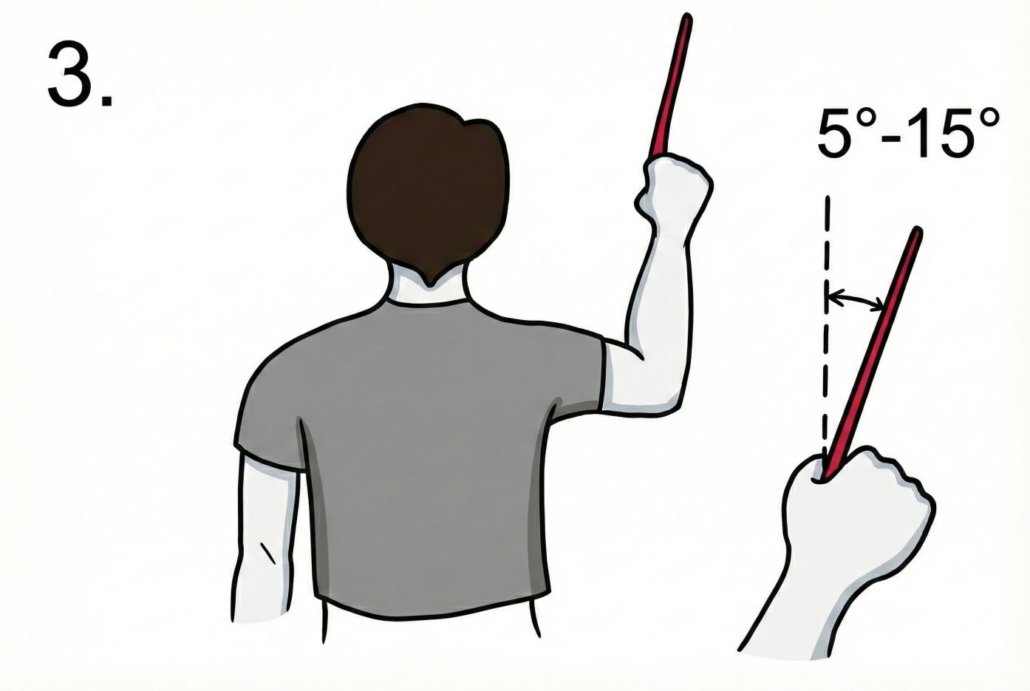
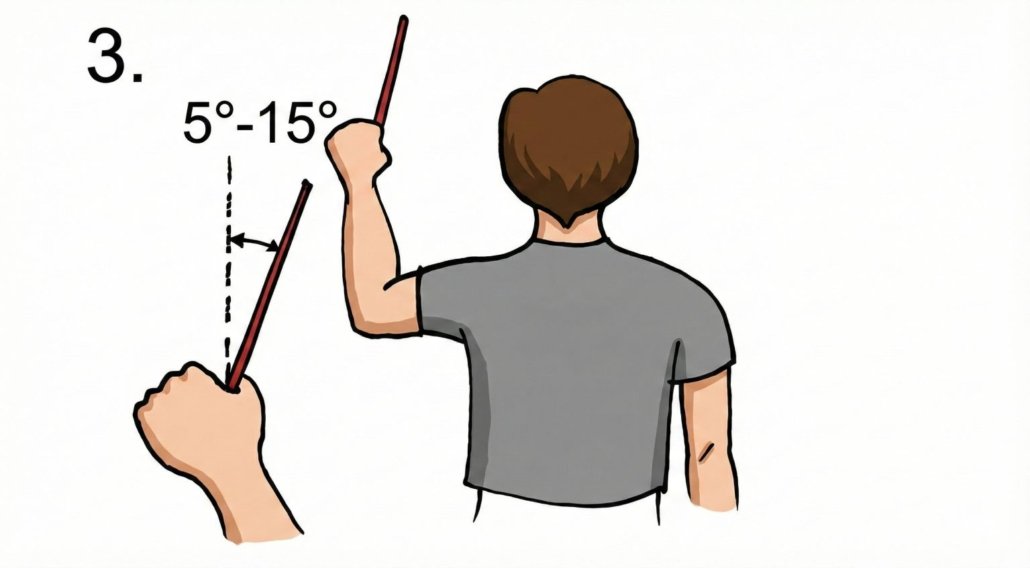
A right-handed person holding a wooden boomerang with their arm straight out, tilted slightly to the right at a 5 to 15 degree angle.

3. The Throwing Angle (The 1:00 PM Position)

NEVER throw sidearm like a Frisbee. This is the #1 mistake!

  • Hold your arm straight out.
  • Tilt the boomerang slightly to the right (about 5 to 15 degrees).
  • Imagine a clock face where 12:00 is vertical; your boomerang should be tilted to the 1:00 o’clock position
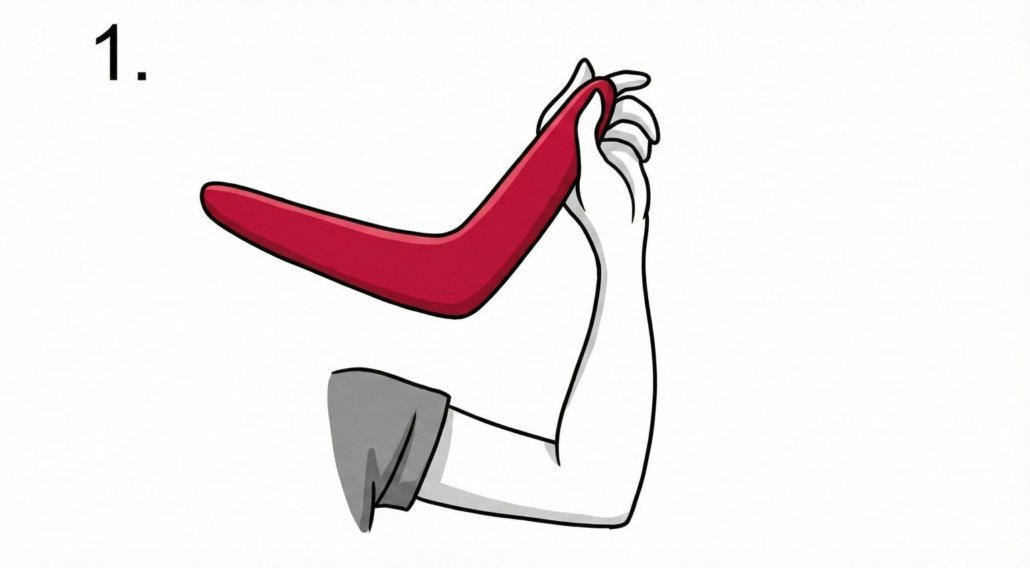
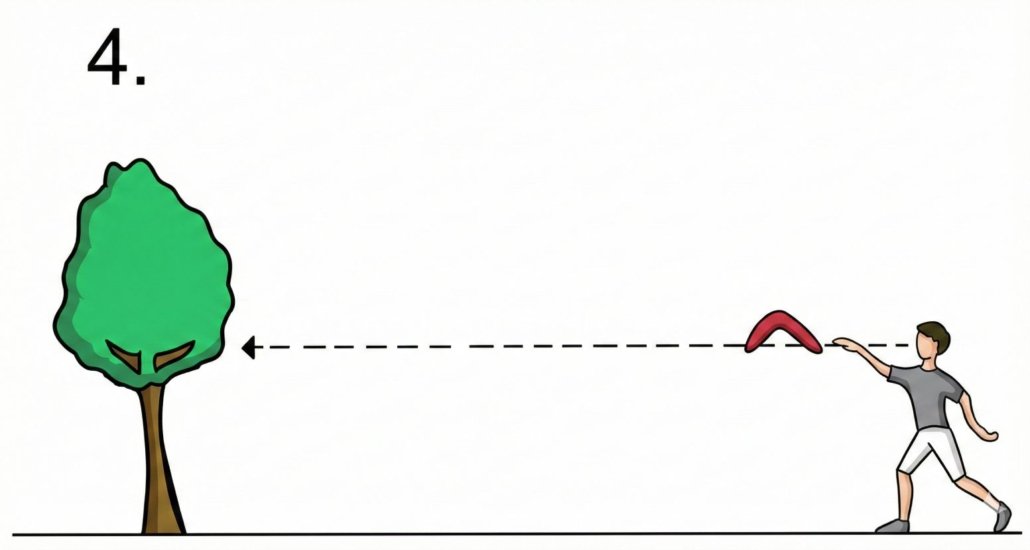
A person aiming a returning boomerang straight ahead at eye level towards a reference point like a distant tree.

4. The Aim

Pick a reference point on the horizon (like a distant treetop or building).

  • Aim straight out at eye level.
  • Do not throw it up towards the sky, or it will swoop up and crash down.
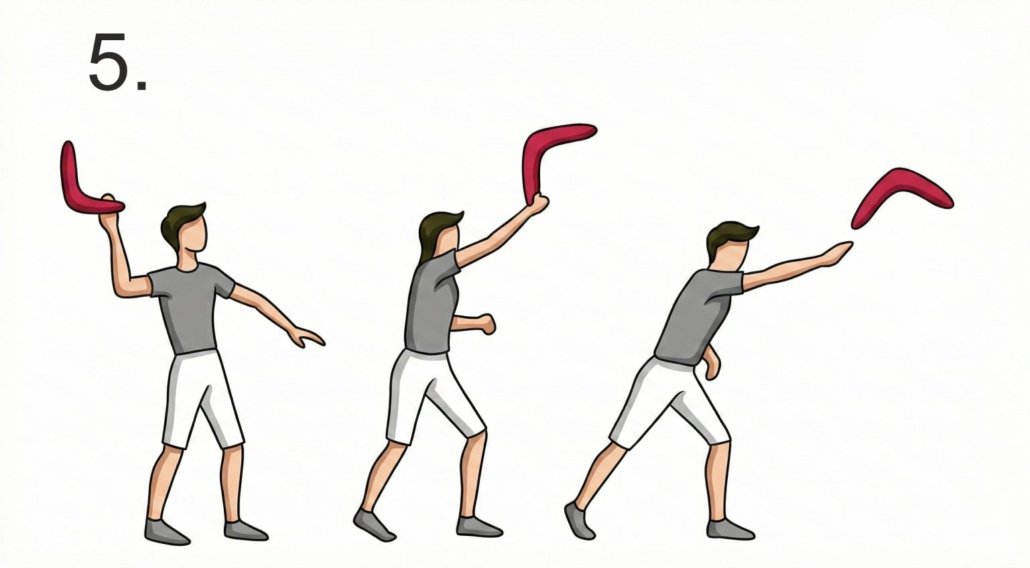
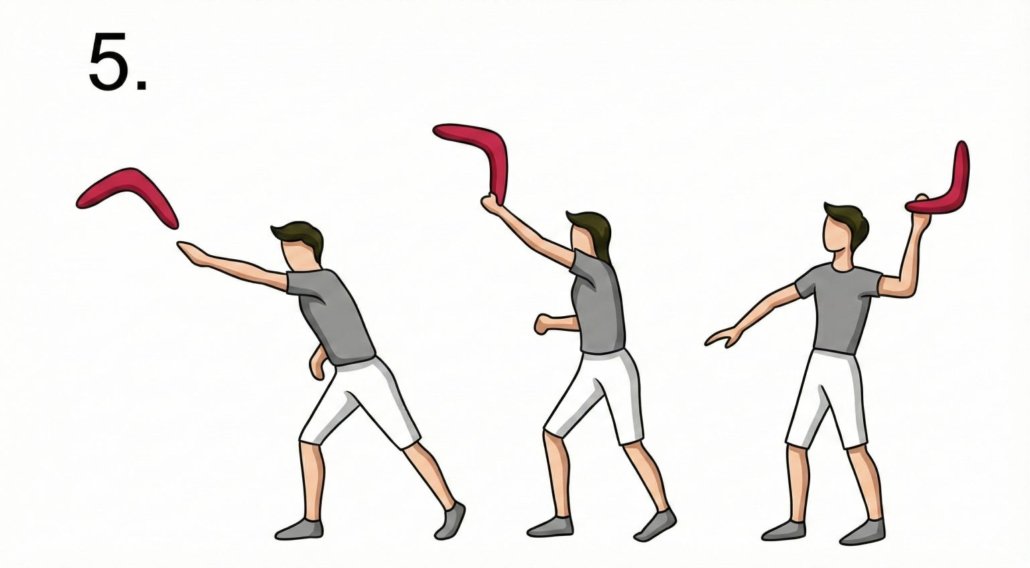
Three-part sequence showing a person throwing a wooden boomerang by bringing it behind their head, snapping it forward, and giving a sharp wrist flick to create spin.

5. The Throw & Spin

Bring the boomerang back behind your head and snap it forward.

  • The Secret: It is not about throwing hard; it is about throwing with SPIN.

Just before release, give a sharp flick of your wrist (like cracking a whip or snapping a towel). This spin creates the lift needed for the return.

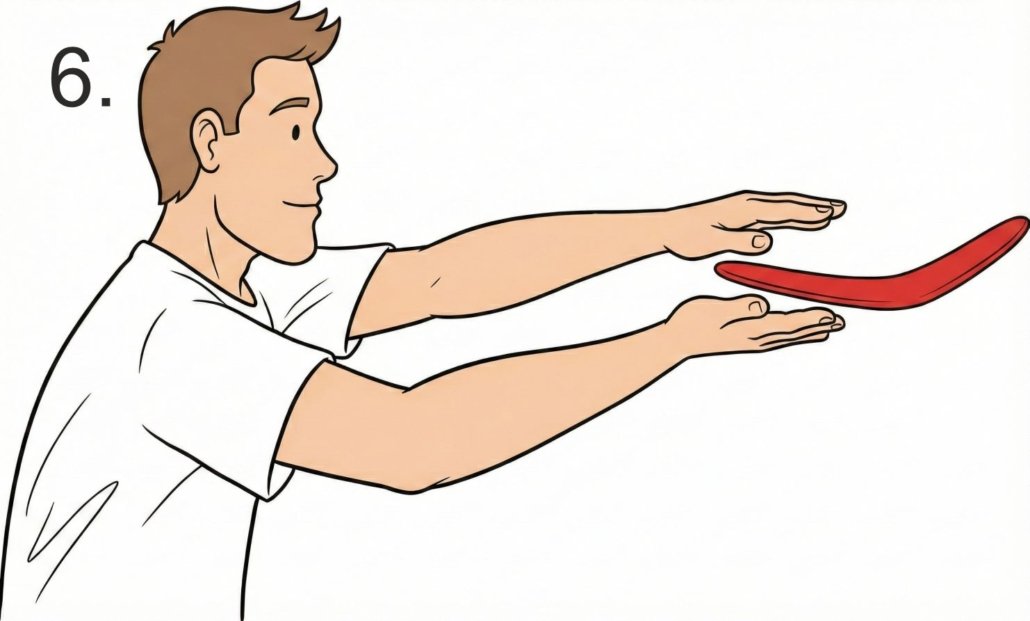
A person demonstrating how to safely catch a returning wooden boomerang by clapping it flat between two hands, known as the sandwich catch.

6. The Sandwich Catch

  • Keep your eyes on the boomerang as it slows down and hovers back toward you.
  • Wait until it is below your shoulders, and then clap your hands together to trap it flat between your palms. This is known as the “sandwich catch” and is the safest way to grab your returning boomerang.

Safety Abort. Not every boomerang should be caught:

  • Too Fast: If the boomerang is returning with high velocity (missile-like), step aside and let it pass.
  • The Head-Hunter: If the boomerang is flying at your face, step aside, turn your face away and cover your head.

INSTRUCTIONS FOR LEFT-HANDED THROWERS

Mastering the return takes patience and technique. Follow these fundamental steps to achieve the perfect flight of your boomerang.

A left hand demonstrating the proper grip for throwing a boomerang, pinching the wingtip with the thumb and index finger, ensuring the flat side faces the thrower.

1. The Grip (The Pinch)

Hold the boomerang vertically. The not decorated/flat side must face YOU (towards your face), and the rounded side must face AWAY from you.

  • Pinch the wingtip firmly between your thumb and index finger, as if you are holding a key or a pen.
Diagram illustrating proper boomerang throwing wind direction, showing a right-handed thrower turning their body 45 degrees to the right of the oncoming wind.

2. The Wind Direction

Face the wind directly. Now, turn your body 45° to the right. You are not throwing into the wind, but 45° to the right of the wind.

A left-handed person holding a wooden boomerang straight out, tilted slightly to the right at a 5 to 15-degree angle, similar to a 1:00 PM position on a clock face.

3. The Throwing Angle (The 1:00 PM Position)

NEVER throw sidearm like a Frisbee. This is the #1 mistake!

  • Hold your left arm straight out.
  • Tilt the boomerang slightly to the right (about 5 to 15 degrees).
  • Imagine a clock face where 12:00 is vertical; your boomerang should be tilted to the 1:00 o’clock position
A left-handed thrower aiming a returning boomerang straight ahead at eye level toward a distant reference point like a tree.

4. The Aim

Pick a reference point on the horizon (like a distant treetop or building).

  • Aim straight out at eye level.
  • Do not throw it up towards the sky, or it will swoop up and crash down.
A three-part sequence showing a left-handed person throwing a boomerang: bringing it behind their head, snapping it forward, and finishing with a sharp wrist flick.

5. The Throw & Spin

Bring the boomerang back behind your head and snap it forward.

  • The Secret: It is not about throwing hard; it is about throwing with SPIN.

Just before release, give a sharp flick of your wrist (like cracking a whip or snapping a towel). This spin creates the lift needed for the return.

A person demonstrating how to safely catch a returning wooden boomerang by clapping it flat between two hands, known as the sandwich catch.

6. The Sandwich Catch

  • Keep your eyes on the boomerang as it slows down and hovers back toward you.
  • Wait until it is below your shoulders, and then clap your hands together to trap it flat between your palms. This is known as the “sandwich catch” and is the safest way to grab your returning boomerang.

Safety Aborts, not every boomerang should be caught:

  • Too Fast: If the boomerang is returning with high velocity (missile-like), step aside and let it pass.
  • The Head-Hunter: If the boomerang is flying at your face, step aside, turn your face away and cover your head.

TROUBLESHOOTING: WHY IS IT NOT RETURNING?

The Cause: You are throwing too wide relative to the wind. The Fix: Turn your body slightly to the right (clockwise). Aim further to the right of the wind. Tip: Try aiming 45-90 degrees to the right of the wind direction.

The Cause: You are throwing with the boomerang laying flat (like a Frisbee). This is the #1 beginner mistake! The Fix: Check your Tilt Angle. The boomerang should be almost vertical (1:00 PM position). Remember: Only a 5–15 degree tilt is needed. Never throw it horizontal like a flying disc.

The Cause: Two possibilities: Aiming down OR Weak throw. The Fix: 1. Aim for eye-level (pick a tree top or building in the distance). 2. Focus on the SNAP of your wrist. Spin creates lift. It’s not about muscle power; it’s about the flick!

The Cause: You are throwing too hard or aiming too high. The Fix: Try aiming slightly lower (still at eye level) or reduce your power slightly while maintaining the spin.

SAFETY TIPS

  1. Find a proper, large open area. You will need a significant amount of space to safely throw without losing your boomerang or accidentally hitting others. Ensure you have a radius of at least 50 to 100 meters (approx. 100 yards) of open space on all sides. Football fields, open parks, and empty beaches are great options. Only throw over grass or sand. Do not throw over concrete, asphalt, or near trees, as hard impacts can damage your boomerang.

  2. Check the wind conditions. Wind is one of the most important factors for a proper return. The best conditions are a light breeze between 1 and 3 m/s. Do not throw in winds exceeding 5 m/s; high winds will cause the boomerang to balloon and drift dangerously off course.

  1. Use the correct throwing angle. Never throw your boomerang horizontally like a Frisbee—this is the #1 mistake! You must hold the boomerang almost vertically, tilted slightly to the right (about 5 to 15 degrees, or the “1:00 o’clock” position). Throwing it too flat will cause it to swoop straight up into the sky and dive back down at high speeds, which can cause serious injury.

  2. Spectator Safety and Age Recommendation: Keep everyone out of the throwing circle; bystanders must always stand behind you and slightly to the left. Because boomerangs are real sports equipment, they are recommended for adults and teens ages 14 and up. Any minors using the boomerang must be under strict adult supervision.

RESPONSIBILITIES & ASSUMPTION OF RISK

Boomerangs are sports equipment, not toys. Failing to strictly adhere to our throwing instructions and safety guidelines can result in serious injury to yourself, bystanders, or property. While designed to return safely when thrown correctly, boomerangs can behave unpredictably in heavy winds or when used with improper technique.

Before your first throw, you must read this guide carefully and secure the required 50 to 100 meters of open space. By purchasing and throwing a boomerang from Woodenboomerangs.com, you explicitly accept full liability for any resulting accidents or damages. Your boomerang is your personal responsibility; if you allow others to use it, you are strictly obligated to brief them on proper throwing techniques and the inherent risks of misuse.