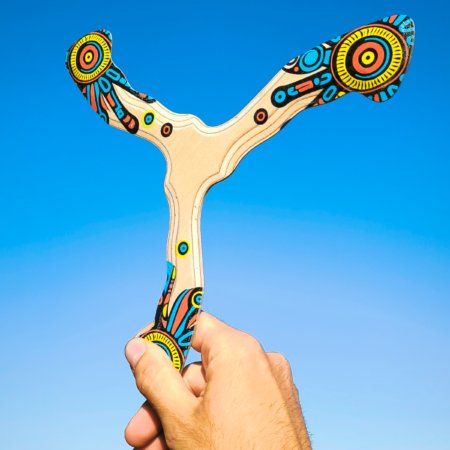
Beginner guide · right- and left-handed

How to Throw a Boomerang So It Comes Back

Quick answer: pinch one wing tip with the decorated side facing you, face the wind and turn 45° to the right, hold the boomerang almost upright (tilted to 1 o’clock), aim at eye level and snap your wrist for spin. Never throw it flat like a frisbee.

Written by the makers: we have shaped and test-thrown wooden boomerangs by hand since 2012.
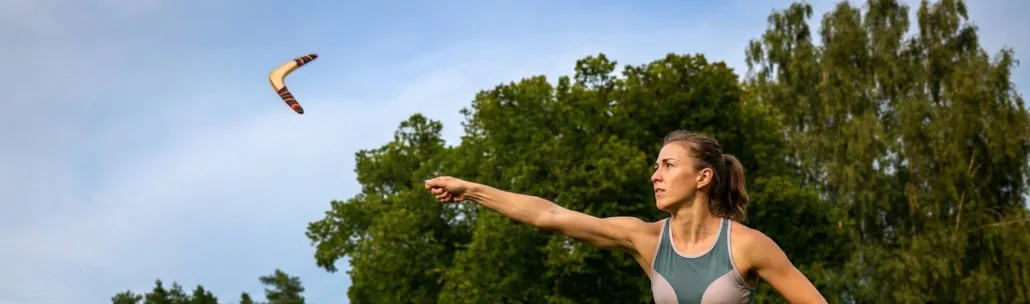
A Golden Swallow boomerang in the air just after an outdoor throw

The short version

The 6 steps at a glance

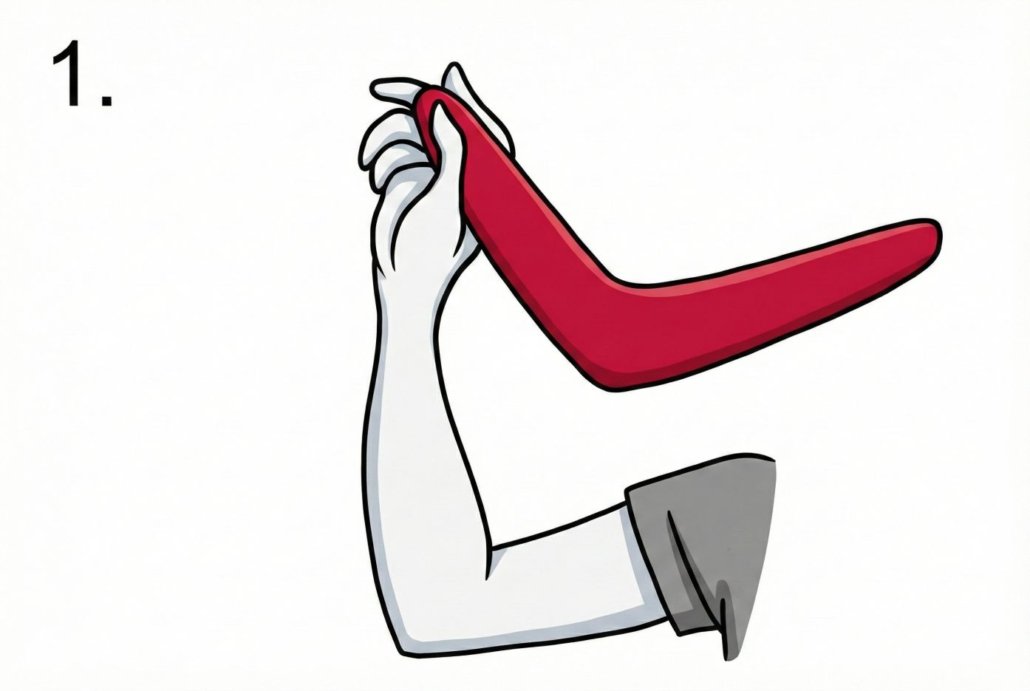
  1. Grip: pinch one wing tip, decorated side facing you.
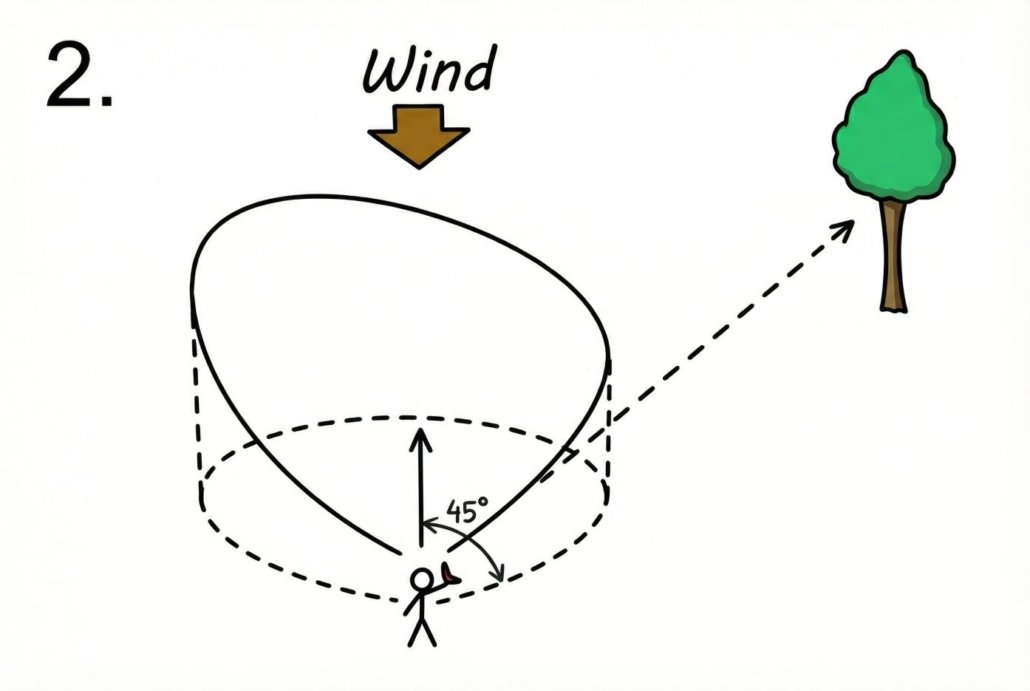
  2. Wind: face the wind, then turn 45° to the right.
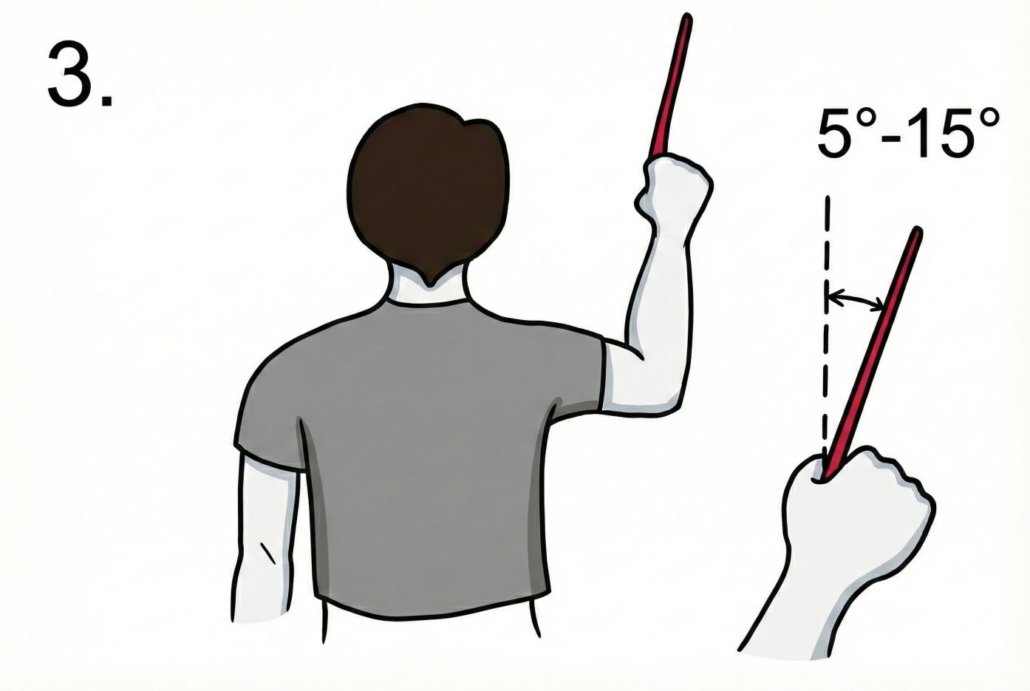
  3. Angle: tilt the top slightly right, to 1 o’clock. Never flat.
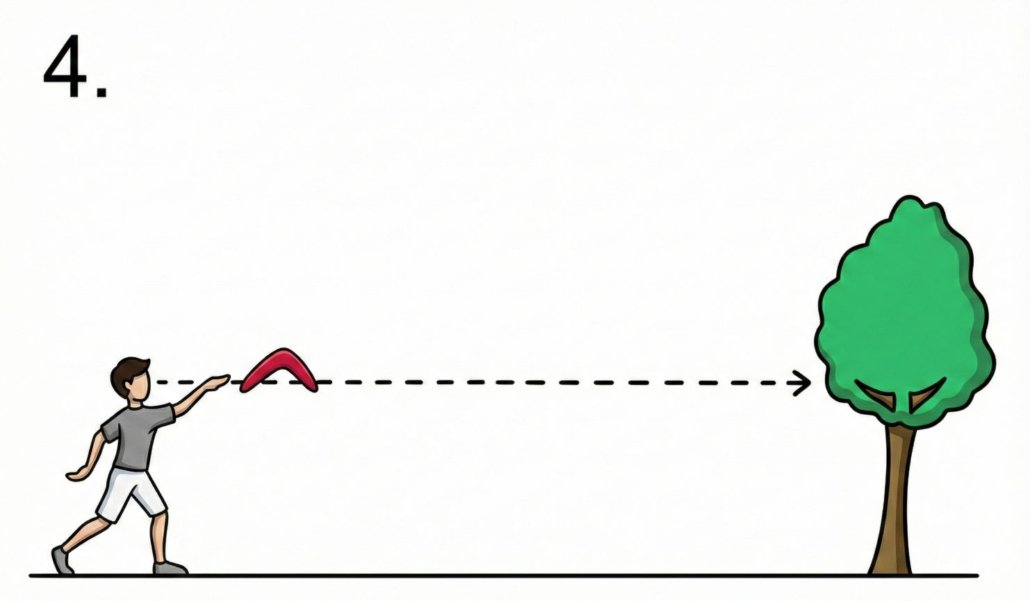
  4. Aim: straight ahead at eye level.
  5. Spin: snap your wrist hard as you let go.
  6. Catch: clap it flat between your palms, below shoulder height.

Left-handed? The same six steps work — see the left-handed version.

Watch a right-handed throw from start to catch. The video loads from YouTube when you press play.

Before your first throw

Four checks that keep you, other people and your boomerang safe.

  • Open field

    Throw only over grass or sand. Stay away from trees, concrete and asphalt — hard hits can break a boomerang.

  • Light wind

    A light breeze of 1–3 m/s is best. Stop when the wind is stronger than 5 m/s: the boomerang can drift away dangerously.

  • Enough space

    Keep at least 50–100 m (about 100 yards) of open space around you.

  • Spectators

    Everyone stands behind you and slightly to the left. Nobody inside the throwing circle.

Boomerangs are sports equipment, not toys. They are recommended for teens 14+ and adults; any minor must be closely supervised by an adult. Read the full safety rules.

Step by step

How to throw a boomerang: 6 steps

Choose your throwing hand. Tilt and spin matter much more than power.

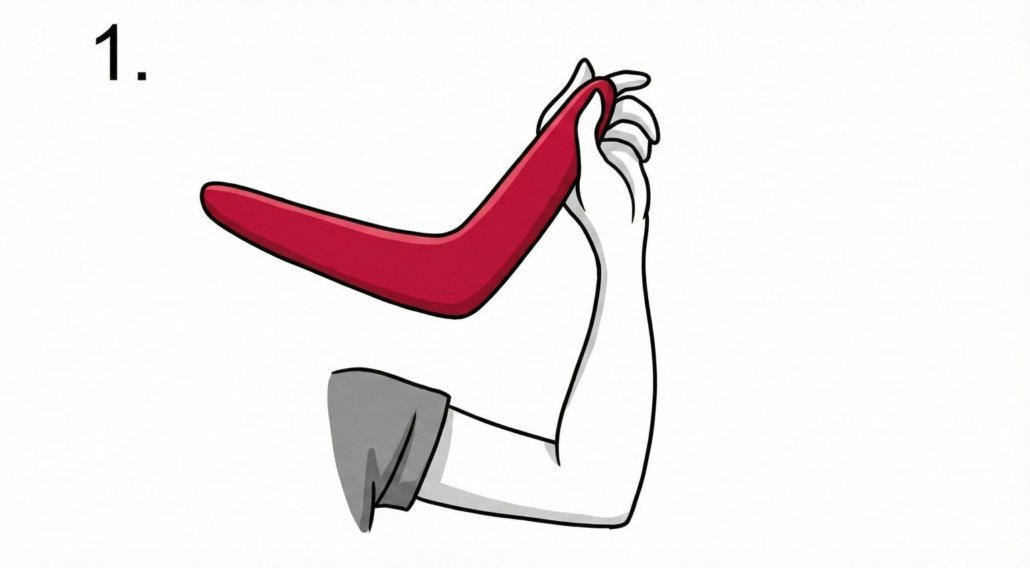
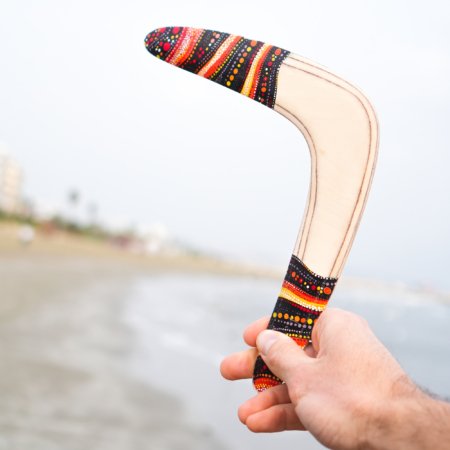
Hand pinching the wing tip of a wooden boomerang between thumb and index finger

Step 1 of 6

The grip: pinch the wing tip

Hold the boomerang upright. The decorated, rounded side faces you and the flat side faces away. Pinch one wing tip firmly between your thumb and index finger, as if you were holding a key.

Diagram of a thrower turned 45 degrees to the right of the wind, with the boomerang's circular flight path

Step 2 of 6

The wind: turn 45° to the right

Face straight into the wind. Then turn your body 45° to the right. You do not throw into the wind — you throw 45° to the right of it.

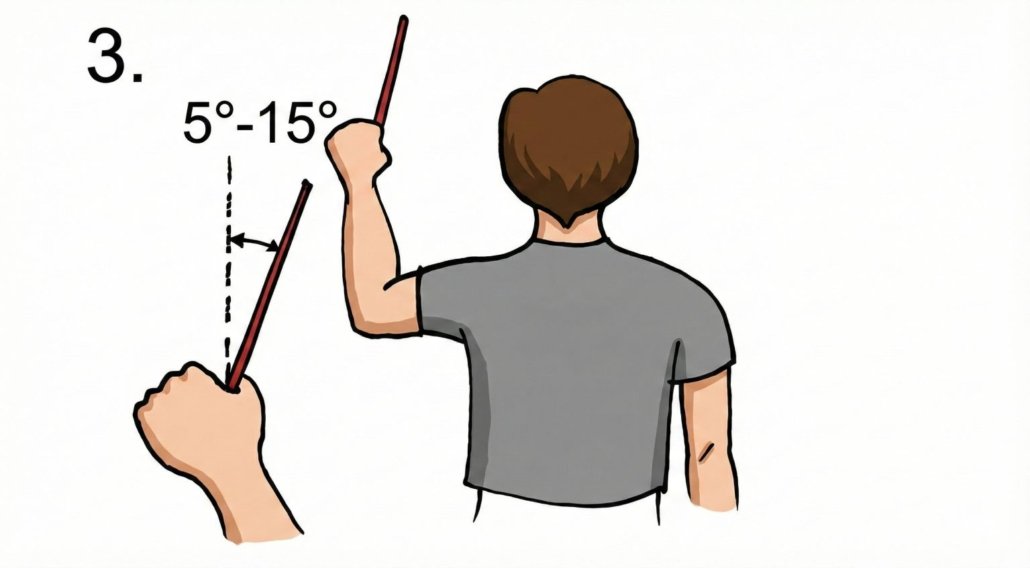
Right-handed thrower holding a wooden boomerang with the arm straight out, tilted slightly to the right

Step 3 of 6

The angle: 1 o’clock, never flat

Hold your arm straight out and tilt the boomerang slightly to the right — only 5–15° from vertical. Picture a clock: 12:00 is straight up, your boomerang points to 1:00.

Never throw it sideways like a frisbee. This is the #1 beginner mistake.

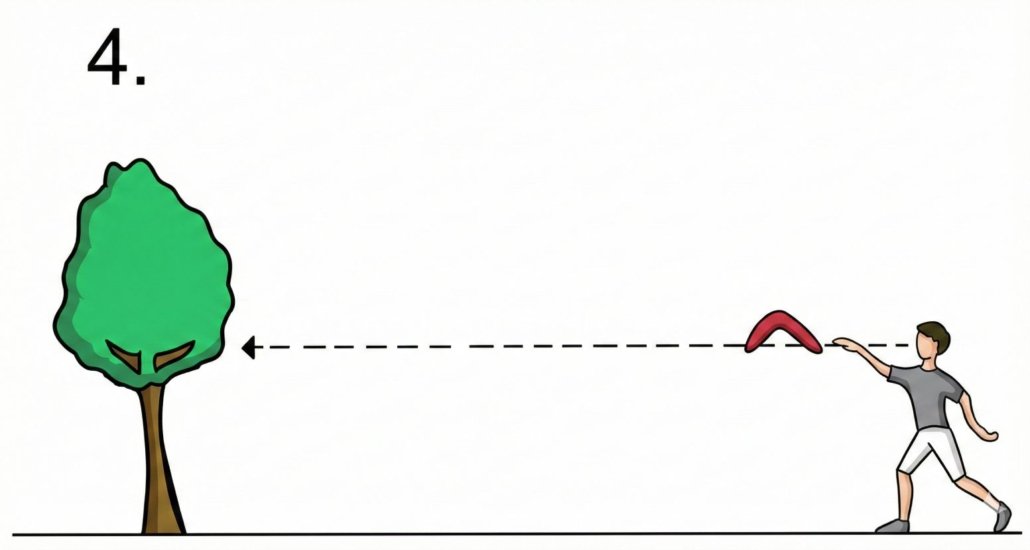
Thrower aiming a returning boomerang straight ahead at eye level toward a distant point

Step 4 of 6

The aim: eye level

Pick a point on the horizon, such as a distant treetop or building, and aim straight at it at eye level. Do not throw upwards — the boomerang will climb, stall and crash down.

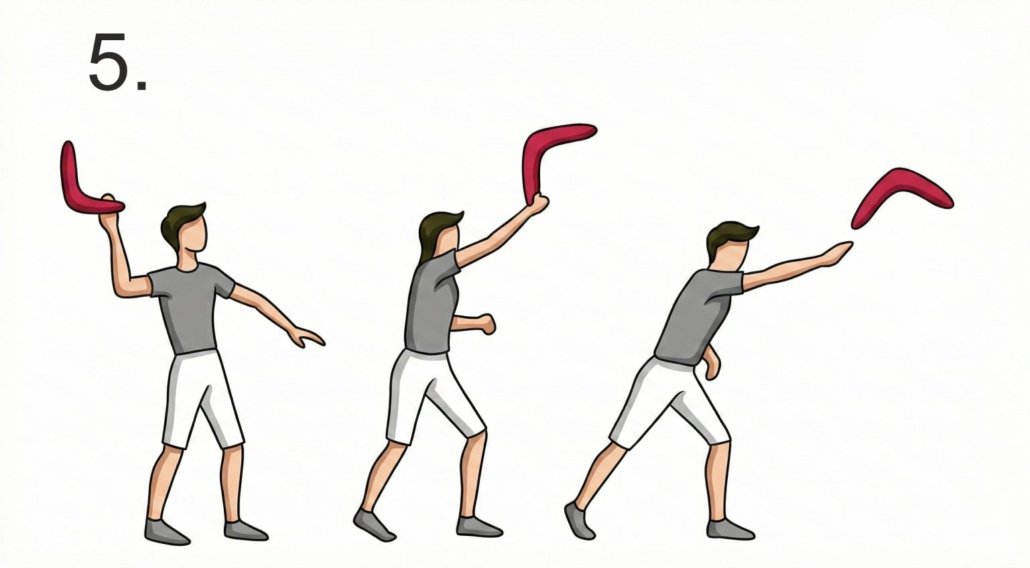
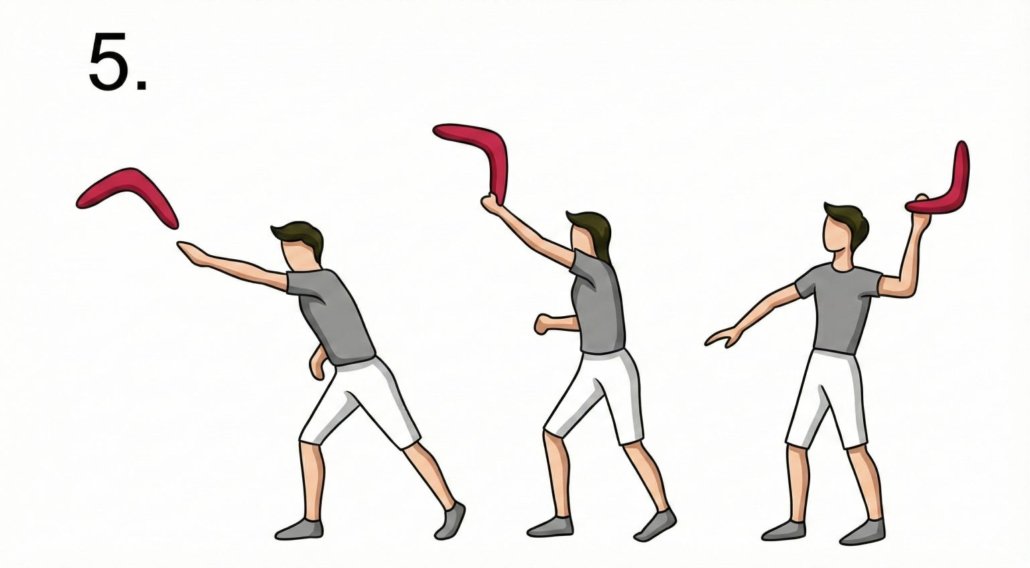
Three-part sequence of a boomerang throw: behind the head, forward swing and wrist snap

Step 5 of 6

The throw: snap for spin

Bring the boomerang back behind your head and throw it forward. Just before you let go, snap your wrist hard — like cracking a whip. Spin creates the lift that brings it back. Power does not.

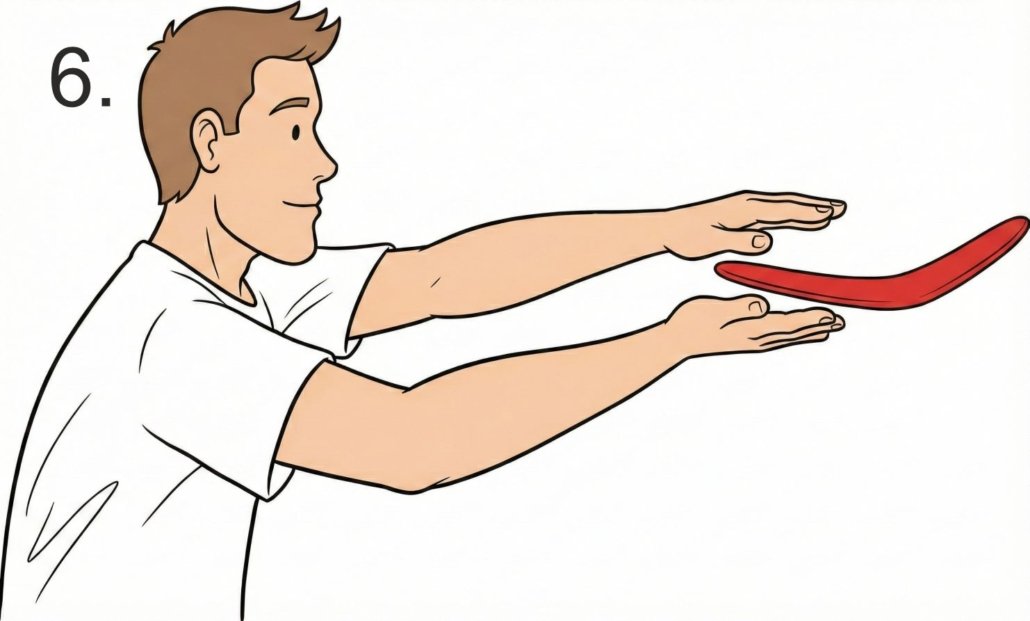
Catching a returning wooden boomerang by clapping it flat between both palms

Step 6 of 6

The catch: the “sandwich”

Keep your eyes on the boomerang as it slows down and hovers back. When it is below your shoulders, clap your hands together and trap it flat between your palms.

Do not catch every throw.

  • Coming back fast? Step aside and let it land.
  • Flying at your face? Step aside, turn away and cover your head.

Throwing with your left hand

You throw the same boomerang with your left hand. It flies the same circle, so the wind angle and the tilt stay the same as for right-handers. The main change is the grip: the flat side faces you.

Left hand pinching the wing tip of a wooden boomerang

Step 1 of 6

The grip: flat side facing you

Hold the boomerang upright. The flat, undecorated side faces you and the rounded side faces away. Pinch one wing tip firmly between your thumb and index finger, as if you were holding a key.

Diagram of a thrower turned 45 degrees to the right of the wind, with the boomerang's circular flight path

Step 2 of 6

The wind: turn 45° to the right

Face straight into the wind. Then turn your body 45° to the right. You do not throw into the wind — you throw 45° to the right of it.

Left-handed thrower holding a wooden boomerang straight out, tilted slightly to the right

Step 3 of 6

The angle: 1 o’clock, never flat

Hold your left arm straight out and tilt the boomerang slightly to the right — only 5–15° from vertical. Picture a clock: 12:00 is straight up, your boomerang points to 1:00.

Never throw it sideways like a frisbee. This is the #1 beginner mistake.

Left-handed thrower aiming a returning boomerang straight ahead at eye level

Step 4 of 6

The aim: eye level

Pick a point on the horizon, such as a distant treetop or building, and aim straight at it at eye level. Do not throw upwards — the boomerang will climb, stall and crash down.

Three-part sequence of a left-handed boomerang throw with a wrist snap

Step 5 of 6

The throw: snap for spin

Bring the boomerang back behind your head and throw it forward. Just before you let go, snap your wrist hard — like cracking a whip. Spin creates the lift that brings it back. Power does not.

Catching a returning wooden boomerang by clapping it flat between both palms

Step 6 of 6

The catch: the “sandwich”

Keep your eyes on the boomerang as it slows down and hovers back. When it is below your shoulders, clap your hands together and trap it flat between your palms.

Do not catch every throw.

  • Coming back fast? Step aside and let it land.
  • Flying at your face? Step aside, turn away and cover your head.

Not coming back? Quick fixes

Find what your boomerang does, then change one thing at a time.

Cause: you are throwing too wide of the wind. Fix: turn a little to the right and try again. Change only one thing at a time, so you can see what helped.

Cause: the boomerang was too flat, like a frisbee — the #1 beginner mistake. Fix: hold it almost upright. Only a 5–15° tilt is needed (the 1 o’clock position).

Cause: you aimed down, or the throw had too little spin. Fix: aim at eye level (a treetop or building in the distance) and focus on a sharp wrist snap. Spin creates the lift — not muscle power.

Cause: you threw too hard or aimed too high. Fix: aim a little lower (still at eye level) or use a bit less power while you keep the spin.

Free 3D practice game

Practice the throw before you go outside

Six short lessons in your browser: the grip, the wind angle, the 1 o’clock tilt, the spin and the sandwich catch.

▶ Play the game

Open the game in a new tab ↗

Boomerang throwing: frequently asked questions

Pinch one wing tip with the decorated side facing you. Face the wind and turn 45° to the right. Hold the boomerang almost upright, tilted to 1 o’clock, aim at eye level and snap your wrist as you let go. Spin and the right angle bring it back — not a hard throw.

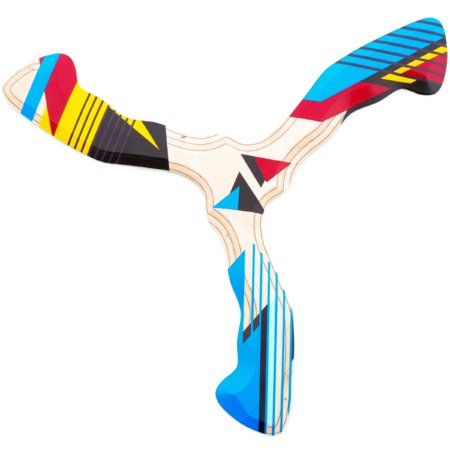
The technique is the same for 2-wing and 3-wing (tri-blade) boomerangs. On a tri-blade such as Hurricane or Seerblade, pinch any one of the three wing tips and follow the same six steps.

The most common reasons are a flat, frisbee-style throw, too little wrist spin, aiming upwards and the wrong angle to the wind. Use the quick fixes above, or read our full guide: Why your boomerang is not coming back.

A light breeze of 1–3 m/s is ideal. Do not throw when the wind is stronger than 5 m/s — the boomerang can climb and drift dangerously off course.

Choose a large open area, such as a football field, an open park or an empty beach, with at least 50–100 m (about 100 yards) of open space on all sides. Throw over grass or sand, never near trees, roads or people.

Use the “sandwich” catch: wait until the boomerang is below your shoulders, then clap it flat between your palms. Do not try to catch a boomerang that comes back fast or flies at your face — step aside and protect your head.

Yes. Left-handers throw the same boomerang with the left hand. The flat side faces you, and the wind angle and tilt stay the same. See the left-handed steps.

Start with a light returning model from our Beginner Boomerangs collection: the classic 2-wing Golden Swallow, the 3-wing Hurricane or Seerblade, or the Easy-Catch v2.

After the last throw, wipe off grass and dirt with a soft cloth, let it dry and check the edges. Never soak it. Our care guide explains more.

Safety rules and your responsibility

  • Find a large open area. You need a lot of space to throw safely without losing your boomerang or hitting others: at least 50 to 100 meters (approx. 100 yards) of open space on all sides. Football fields, open parks and empty beaches are good choices. Throw only over grass or sand, never over concrete or asphalt or near trees.
  • Check the wind. The best conditions are a light breeze between 1 and 3 m/s. Do not throw in winds over 5 m/s; strong wind makes the boomerang balloon and drift dangerously off course.
  • Use the correct angle. Never throw horizontally like a frisbee. Hold the boomerang almost vertically, tilted slightly to the right (about 5 to 15 degrees, the “1 o’clock” position). A flat throw makes the boomerang swoop up and dive back down at high speed, which can cause serious injury.
  • Spectators and age. Keep everyone out of the throwing circle; bystanders always stand behind you and slightly to the left. Boomerangs are real sports equipment and are recommended for adults and teens ages 14 and up. Any minor using a boomerang must be under strict adult supervision.

Responsibilities and assumption of risk

Boomerangs are sports equipment, not toys. Failing to strictly adhere to our throwing instructions and safety guidelines can result in serious injury to yourself, bystanders, or property. While designed to return safely when thrown correctly, boomerangs can behave unpredictably in heavy winds or when used with improper technique.

Before your first throw, you must read this guide carefully and secure the required 50 to 100 meters of open space. By purchasing and throwing a boomerang from Woodenboomerangs.com, you explicitly accept full liability for any resulting accidents or damages. Your boomerang is your personal responsibility; if you allow others to use it, you are strictly obligated to brief them on proper throwing techniques and the inherent risks of misuse.

Ready for your first throw?

Start with a light beginner boomerang, or add a name, a date or a logo to make it a gift that keeps coming back.

Not sure which model to choose? Email us at info@woodenboomerangs.com.