
Why Your Boomerang Is Not Coming Back

When a boomerang misses you, throwing harder is an easy reaction. A better first step is to describe what happened. Did it climb sharply, fall before completing the turn, pass to one side or come back too fast? Each pattern gives you a place to start checking. If you are new to throwing, first read our complete throwing instructions for your hand and model. This guide helps you diagnose the next attempt.
Make the next throw useful
Check the boomerang for cracks, loose layers or a changed shape before testing your technique. Then use a large clear grass area and a light, steady breeze. Stop if the wind is gusty or people enter the flight area. Begin from the same position so you can compare where each throw lands.
Keep the grip, model and effort consistent. Change one thing at a time and note the result. If you change the tilt, aim, wind angle and power together, you will not know which change helped. The causes below are possibilities to check, not a diagnosis that can be proved from one flight.
It climbs sharply and drops
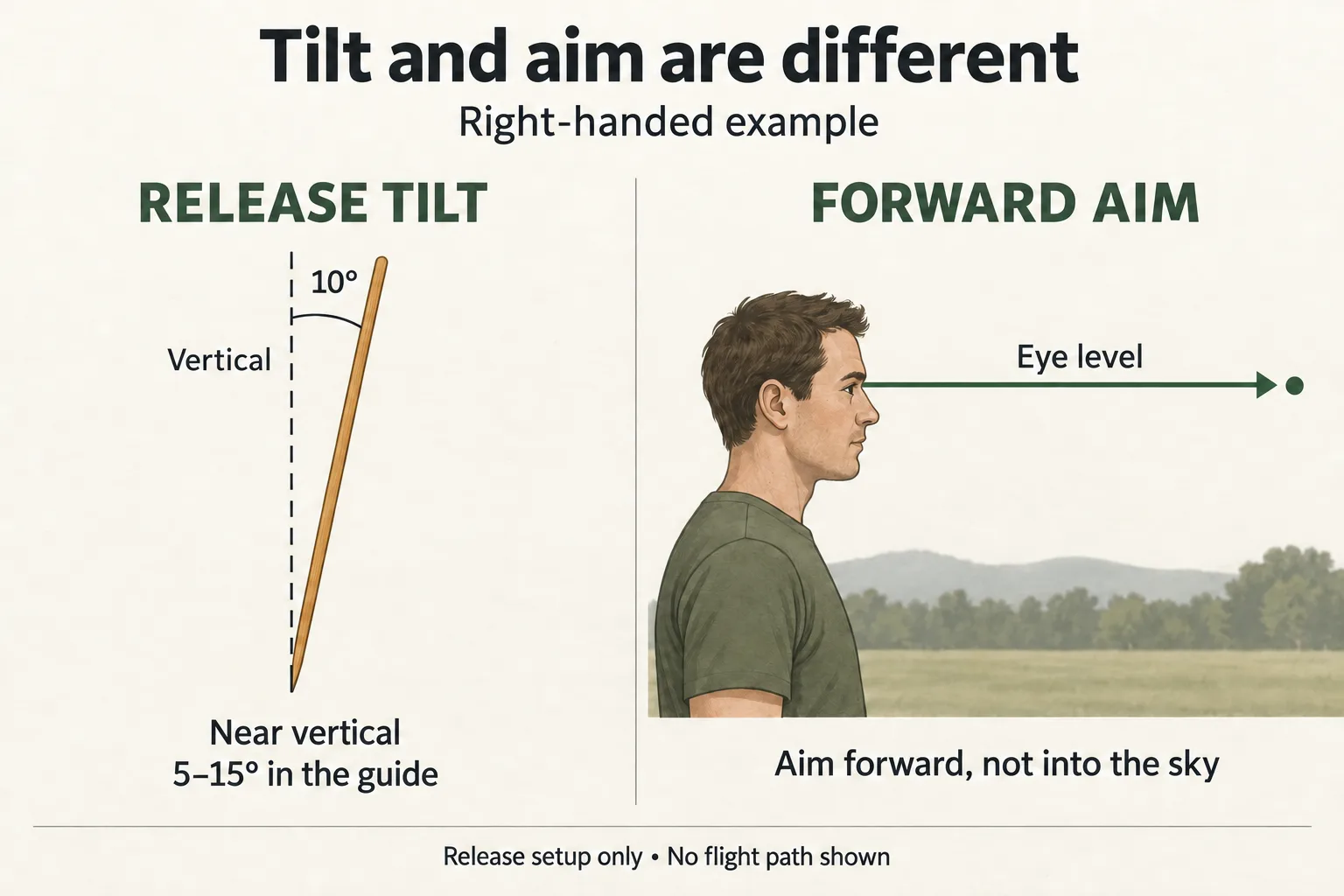
First check whether you released the boomerang too flat. Excessive tilt can send the flight upwards, especially when combined with a high aim or stronger wind. Return to the near-vertical release described for your model. Keep your forward aim near eye level rather than directing the throw into the sky.
Do not immediately add power to a climbing throw. If the release looked correct but the boomerang rose much higher as a gust arrived, stop and wait for steadier conditions. A change in weather can look like a change in technique.
It falls before completing the return
Watch the first part of the flight. If the boomerang heads towards the ground immediately, check whether you aimed down or dropped your hand at release. Restore the forward, eye-level aim in the basic instructions before changing your effort.
If it starts forward but loses its flight early, check your grip and wrist action. A throw can move quickly through the air without enough spin. Aim for a clean release with a positive wrist snap. Releasing with more spin is different from simply pushing harder with your arm.
Also check that you are holding the correct face towards you for your throwing hand. If the same problem continues after a controlled reset, stop and ask for help with the model and a short video of the release. Do not bend or sand the wings to compensate for an uncertain throwing technique.
It makes a turn but lands in the wrong place
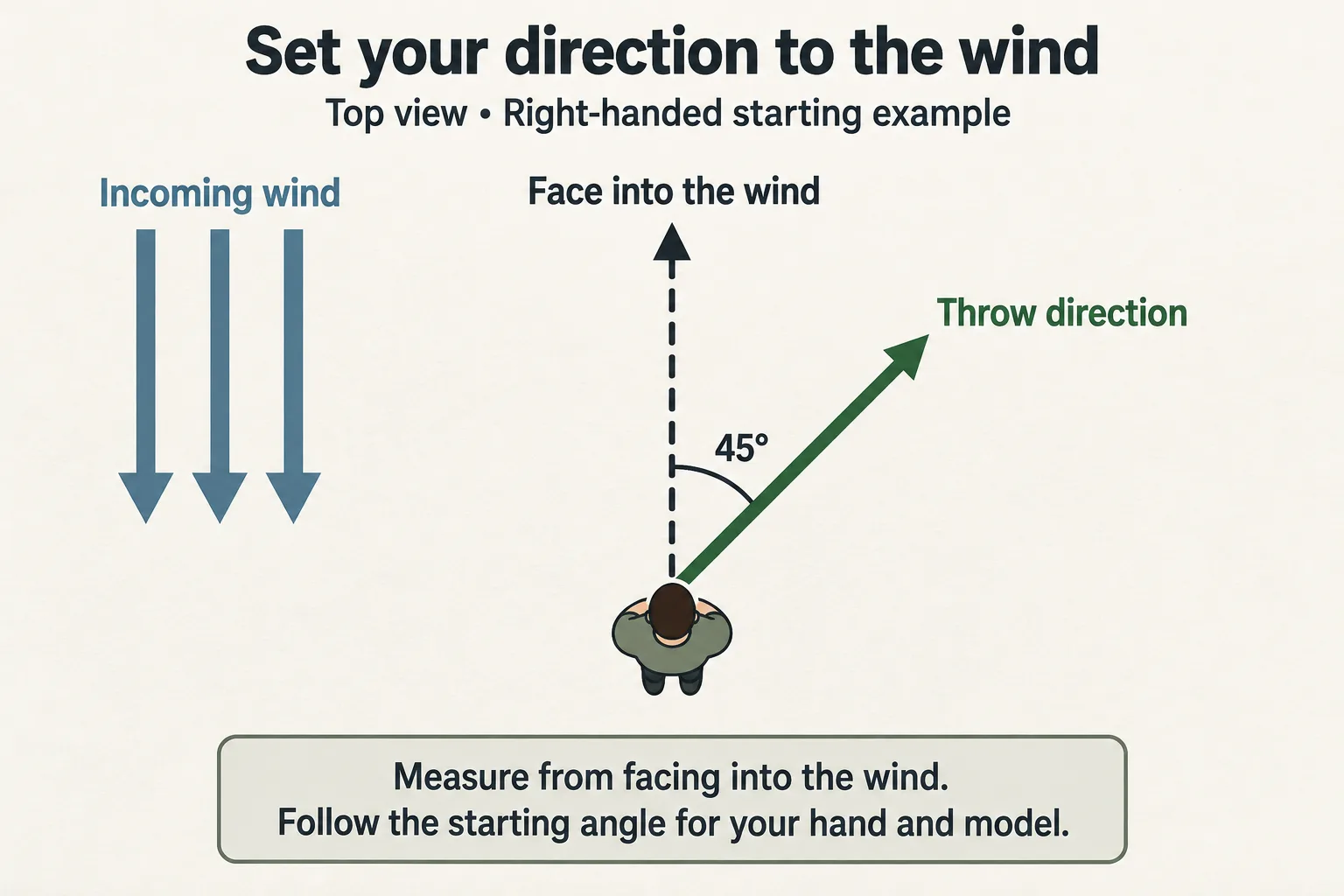
Check the wind again at your actual throwing position. A tree line, a slope or a building can make local airflow different from what you expected. Compare your throwing direction with the direction the wind comes from, rather than repeatedly aiming at the same landmark.
A landing to the left or right does not, by itself, tell you to turn a fixed number of degrees in one direction. Handedness, model, release and wind all affect the result. Start from the model’s recommended wind angle, then make a small change to that angle while holding the other parts of the throw steady. If the landing moves farther away, return to the starting setup.
It comes back too fast or too high
Let that throw land. Do not reach into a fast return or try to catch a boomerang at head height. Step clear of its path; if it approaches your face, turn your face away and protect your head. Only attempt a two-handed catch when the boomerang has slowed and is below shoulder height.
Before the next throw, check the wind, upward aim and release tilt. If those match the instructions, reduce the arm effort while keeping a clean, spinning release. A fast return is a reason to improve control, not a challenge to make a more difficult catch.
Record enough to see a pattern
Use a short note after each safe attempt: “climbed early; brought tilt closer to vertical; next flight stayed lower.” You can also record whether the landing was in front, behind or to either side of your starting position. Keep the same reference point and note any wind change.
If a friend films a throw, they must stay outside the flight area. A clear view of the release is more useful than a close shot of the catch. Share the model name, throwing hand, wind conditions and the main symptom when asking for advice.
If the boomerang’s shape has changed or an impact has exposed a crack, move from technique checks to a condition check with us. If you are using a model beyond your experience, compare our current beginner models before trying to solve every problem with more force.

